In August 2026, the California Energy Commission (CEC) approved what it’s calling the “Replacement Tire Efficiency Program” that goes into effect in two phases, with the first one starting in 2029.
Basically, the program ensures the availability of replacement tires that will maintain your vehicle’s original fuel efficiency specs (or EV range) that you saw on the window sticker.
Why is this an issue? Well, many automakers fit their new vehicles with specially-prepped tires designed to meet lofty fuel efficiency benchmarks—and these often-unobtanium tires are usually made in limited batches specifically for the car manufacturer.
In other words, they’re not always available to the public when it comes time to buy replacement tires, which means you may be stuck with a less-efficient tire design.
If you’ve ever noticed that your car or truck’s fuel economy takes a hit after replacing its original tires…that’s probably a big reason why.
And it’s absolutely worth mentioning that less-efficient tires would have a detrimental effect on the range of an electric vehicle too.
When Does This Program Take Effect & What Does It Cost?
The California Energy Commission says this’ll roll out in two phases.
- Phase One will run from 2029 to 2033. This serves as a soft-launch of sorts, in which the built-in cost to consumers when buying replacement tires is $1.50 per tire, or six bucks for a four-tire set.
- In 2033, Phase Two begins and the program goes into full effect. At that time, the cost to consumers buying replacement tires increases to $6.50 per tire, or 26 bucks for a four-tire set.
Given the anticipated improvement in fuel economy with more efficient tires, the CEC offered data that supports an overall savings of $179* over the life of the replacement tires during a four-year period—which it hopes offsets the cost of the up-front per-tire fee.
California is also pretty optimistic that the program’s full implementation in 2033 gives tire manufacturers plenty of runway when developing and releasing these new tires to the public.
* The CEC used a fuel cost of $4.60 per gallon to reach this number. $179 gross figure is from Phase Two of the program’s implementation, so minus the up-front $26 cost for the four tires, the net benefit is $153.
Data Behind The Replacement Tire Efficiency Program
There’s a massive report that really dives into the numbers on both the cost and environmental impact behind this program. If you’ve got some time to comb through a 300+ page document, you can read it here:
Replacement Tire Efficiency Program: Environmental Impact Report
But one of the more salient takeaways from the study focuses on Rolling Resistance Coefficient, or RRC if you’re in a hurry.
Basically, RRC plays a big roll…err…role in determining how efficient your tires are at spinning right round, baby.
The lower the number, the better. So the CEC compiled RRC data on various OE and aftermarket tires, then plotted it like-a so:
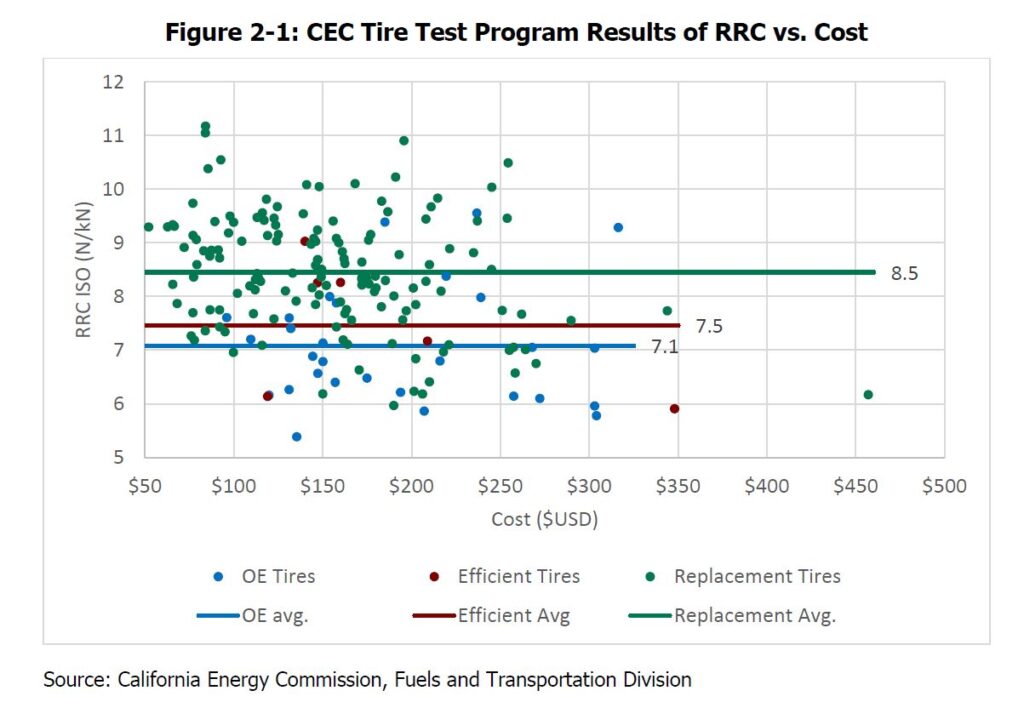
See the blue line? That’s the average RRC of tires fitted on brand new vehicles and, sure enough, it’s the best out of the three tire categories tested—again, the tires were no doubt optimized to achieve the maximum fuel efficiency possible. The green line is the average RRC of a new aftermarket tire.
You’ll also notice that the X axis on the chart outlines cost. In fact, the whole point of this particular dataset was to show that making and selling fuel efficient tires in the automotive aftermarket won’t have a significant impact on the overall price of the tire. Again, read the whole report for the nitty-gritty here.
And recalling that Rolling Resistance Coefficient metric, the CEC has set the established guidelines that a tire manufacturer has to meet for each phase of the Replacement Tire Efficiency Program.
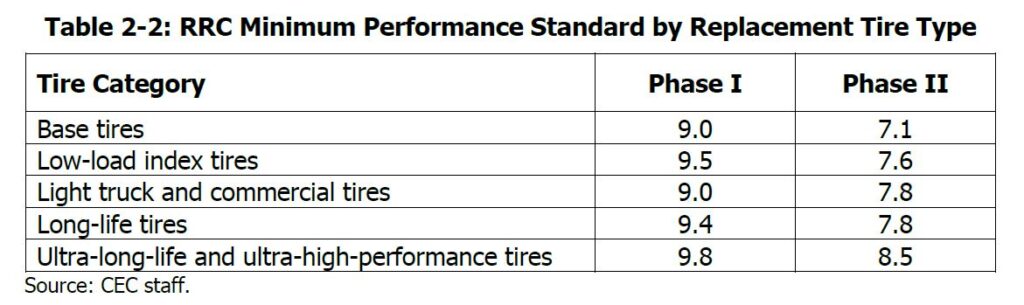
Using the averages in the earlier chart as reference, the 9.0 RRC benchmark for Phase 1 is above the average RRC of the typical replacement tire (8.5 RRC) right now, so it sure sounds like the California Energy Commission was pretty pragmatic when setting these goals for 2029.
And just to recap: When talking about Rolling Resistance Coefficient, the lower the number, the better, because it essentially means the tire will roll with less effort.
The Goal of California’s Replacement Tire Efficiency Program
The CEC claims that this whole deal will have three main benefits.
- For starters, more efficient vehicles means drivers in California are spending less money at the pump.
- It also means that drivers are using less fuel to get to their destinations—which the CEC says can have significant upsides in air quality.
- And finally, less energy demand (including EV charging) results in less stress on both resources and infrastructure.
What Tires Are NOT Impacted by These Standards
Just as important as the tires included in this regulation though, are the tires that the CEC chose to exclude:
- Competition tires designed for motorsports
- Winter-type snow tires
- All-season winter performance tires
- Used and retreaded tires
- Deep tread tires
- Tires designed for ATVs and other off-road vehicles
- Large off-road tires for use up to 99 mph
- Motorcycle tires
- Temporary-use spare tires
- Small tires with ≤13-inch nominal rim diameter
- Limited production tires (<15,000 per year)
- Tires sold for use on an emergency vehicle
- High load index tires (122 or greater)
- Tires not capable of sustaining speeds over 50 mph
- Space saver tires
We were pleasantly surprised to see such a lengthy list of exemptions. In fact, it sure seems like the CEC is focused almost exclusively on the light truck, SUV, and passenger car markets here.
How Does This Impact Racers, Off-Roaders & Classic Car Owners
A terse look at the list of exemptions reveals that tires designed solely for racing and motorsports purposes are not impacted by California’s impending Replacement Tire Efficiency Program.
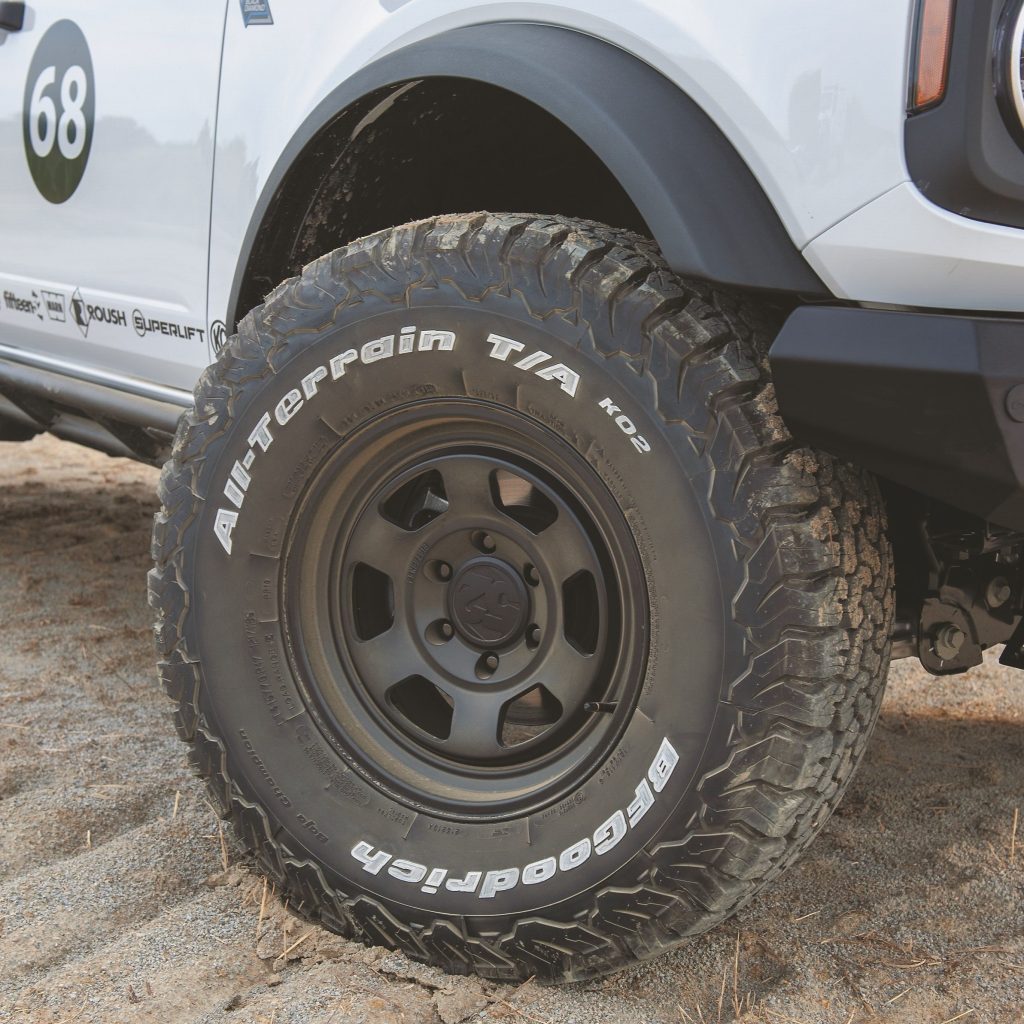
Look closer and you’ll see the phrase “Deep Tread Tires” and “Large Off-Road Tires for Use up to 99 mph.” That’s a curiously broad definition that would presumably include a large swath of big-lugged off-road tires as well.
As for the classic or collector car owner, a few other key exemptions pop out at us.
“Small tires with ≤13-inch nominal rim diameter” would certainly include a lot of vintage imports and compacts. Plus, a lot of domestic drum-equipped cars came with 13s from the factory too.
Then there’s the “Limited production tires (<15,000 per year)” clause which would likely include bespoke brands and special issue rubber for some more exclusive sports cars.
But if you’re a Californian just looking for some traditional rubber for your late model or classic muscle car, it sure seems like you’ll be paying that extra premium for fuel efficient tires beginning in 2029.
…Which makes us wonder if the California Energy Commission can calculate some of that cost saving data into 1/4-mile increments.
***
Read more about this regulation in this official Press Release from the California Energy Commission