On June 30th, 1953 the first production Corvette rolled off the assembly line.
And after introducing the world to the famed LS engine family, the C5 Corvette blended performance and practicality to become a versatile sports car that could tackle a workday commute with the same ease as a road course chicane.
Not resting on its laurels however, the Corvette development team took what it learned during the C5 generation and readied an even more potent version of America’s sports car to continue the Corvette’s storied legacy.
This article is part of an expanding series on the history of the Corvette. You can see all the stories we have so far here:
- A Look Back at the History of the Corvette C1 (1953-62) Generation
- A Look Back at the History of the Corvette C2 (1963-67) Sting Ray Generation
- A Look Back at the History of the Corvette C3 (1968-82) Stingray Generation
- A Look Back at the History of the Corvette C4 (1984-96) Generation
- A Look Back at the History of the Corvette C5 (1997-2004) Generation
- A Look Back at the History of the Corvette C6 (2005-13) Generation
Good, Now Make it Better
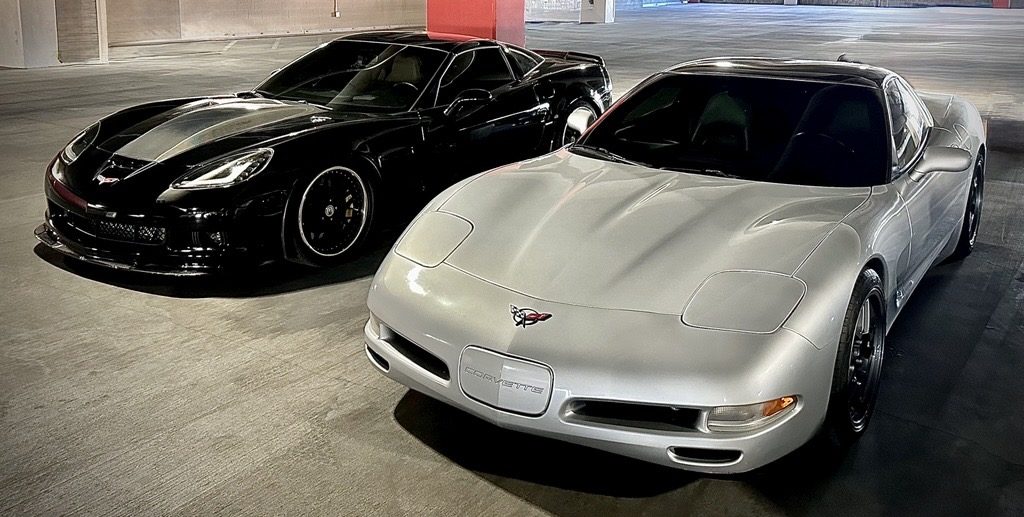
There’s no denying that C5 accomplished its mission of improved sales, moving north of 30,000 units each year (save for the introductory 1997 model). So Chevy faced a conundrum: How do you mess with success?
The answer was easy, make it better in every way, without deviating too much from a winning recipe.
You can clearly see that the designers were faithful to the outgoing Corvette silhouette, but a look at the specs reveals that the new C6 Corvette actually has a shorter overall length—yet a longer wheelbase. Perhaps more importantly, the passenger cabin was roomier.
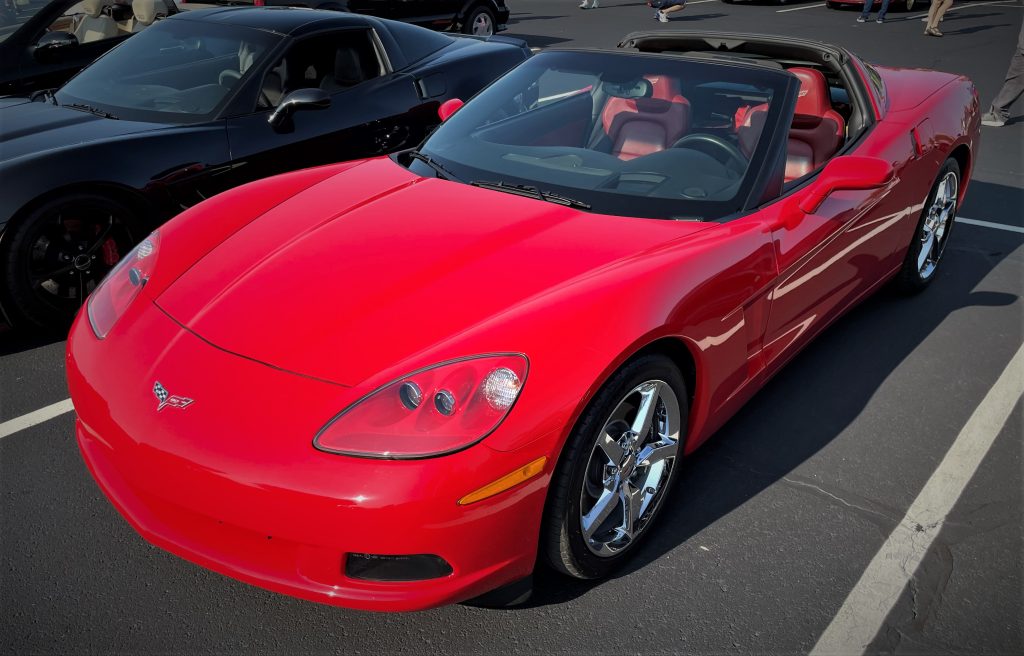
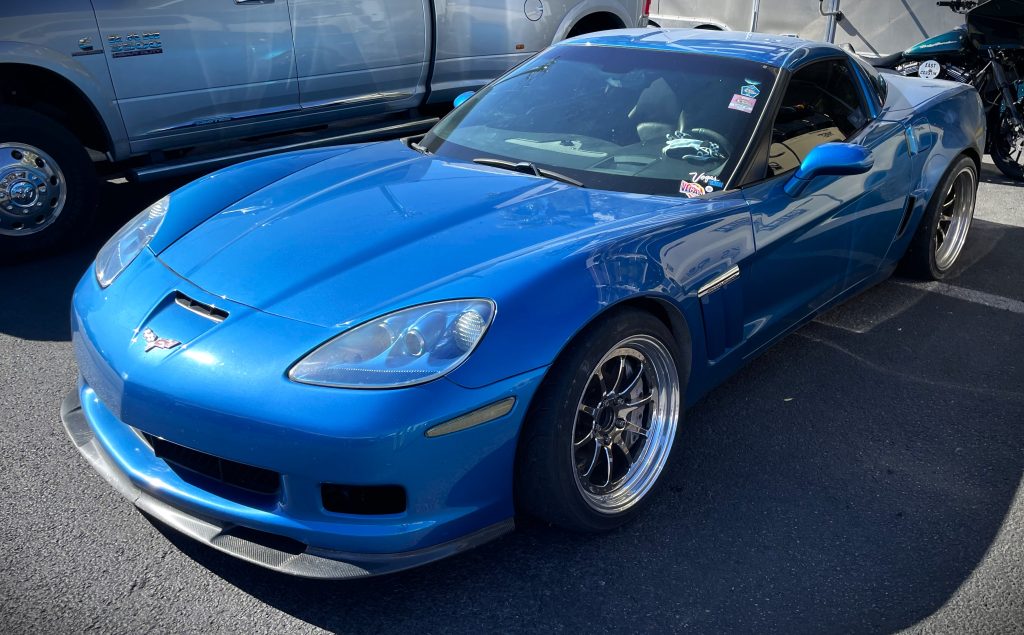
The most noticeable change was perhaps on the outside, where the new C6 Corvette ditched the pop up headlights for a set of fixed headlamps—a feature not seen since the last C1 Corvette in 1962. While some Corvette purists cried blasphemy, the move was deemed necessary as a result of updated pedestrian safety guidelines.
The C6 launched as a hardtop with a detachable roof panel; a convertible joined the party later in the model year. And although a Z06 model had vanished from the showroom, buyers could still opt for the Z51 performance package that had been around since the days of the C4 Corvette. For the C6, the Z51 kit gave you a stiffer suspension, upgraded brakes, and a close ratio manual, or a six-speed automatic with a revised rear gearset.
But if anyone questioned whether Chevy was taking C6 Corvette performance seriously, all they had to do was look under the hood.
The LS Family Grows Again…and Again…and Again
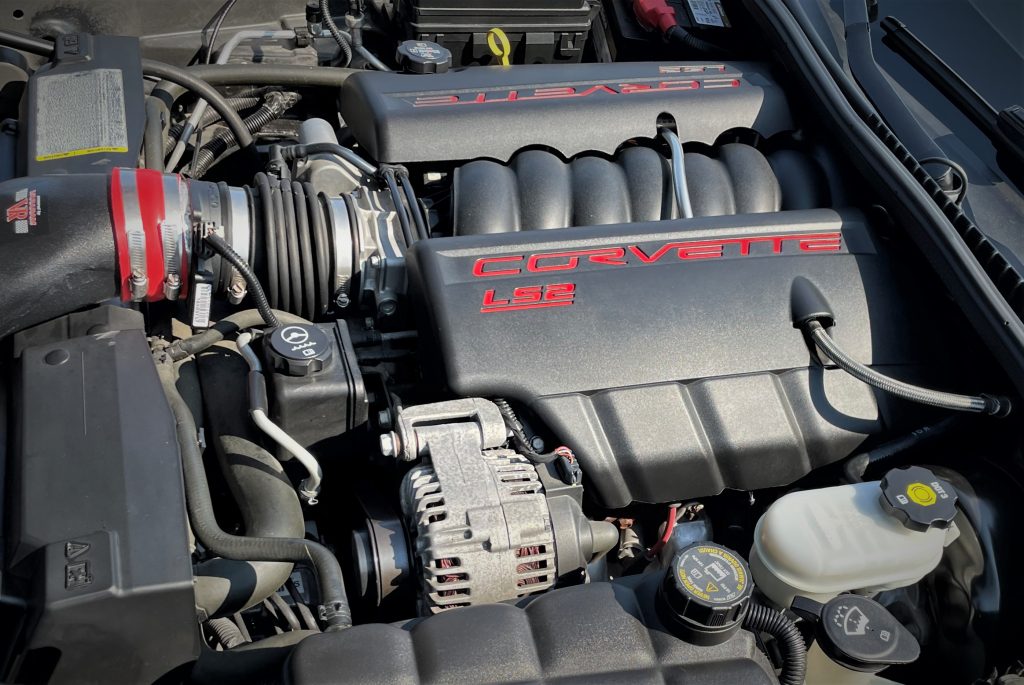
While the final year C5 Corvette carried the time-tested 5.7L LS1 as the base engine in 2004, the incoming C6 brought along a new 6.0L LS2.
This aluminum block powerplant was good for around 390 horsepower, which was about a 40 horsepower bump from the base C5’s LS1.
But the LS2’s tenure in the Corvette was short lived, and was only offered in the C6 from 2005-07. That’s because Chevy had an even more potent engine up its sleeve, the LS3.
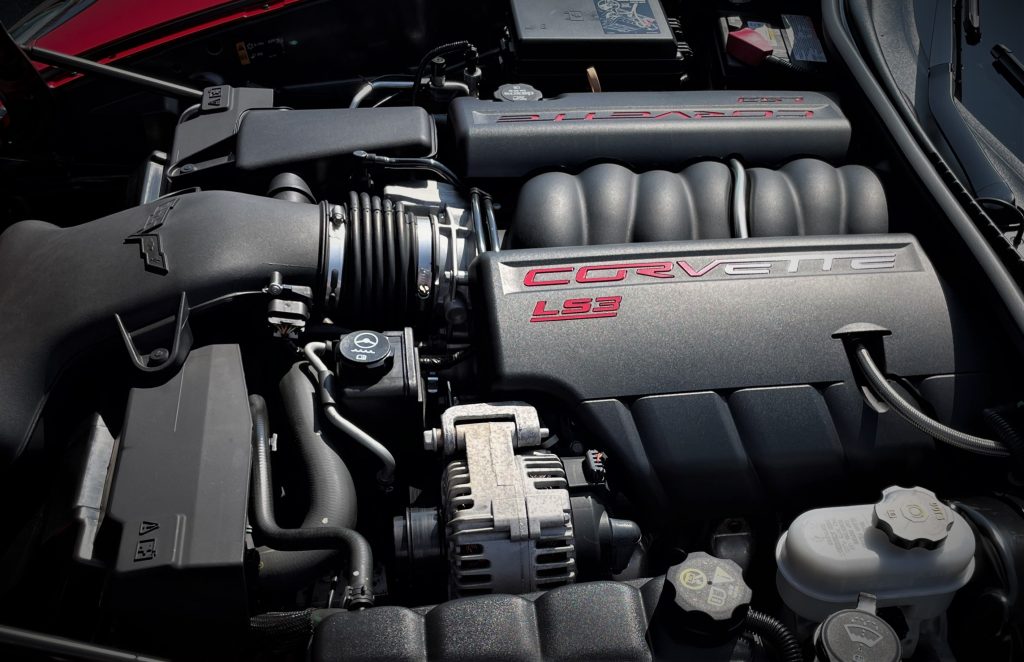
The 6.2L LS3 engine marked another displacement bump for the Corvette’s base powerplant. The extra cubes resulted in 430 horsepower, a pickup of around 30 horsepower from the LS2. The LS3 would carry on in the base and Z51 package Corvette through the end of the C6’s production run in 2013.
Then of course, there were a few different engines offered on the special models…
The Z06 Returns!
While it took a brief hiatus, Chevy was quick to make sure the Z06 would be a part of the C6 performance portfolio. The C6 Z06 bowed in 2006 and, in looking at the specs, it’s clear that the wait was indeed worth it.
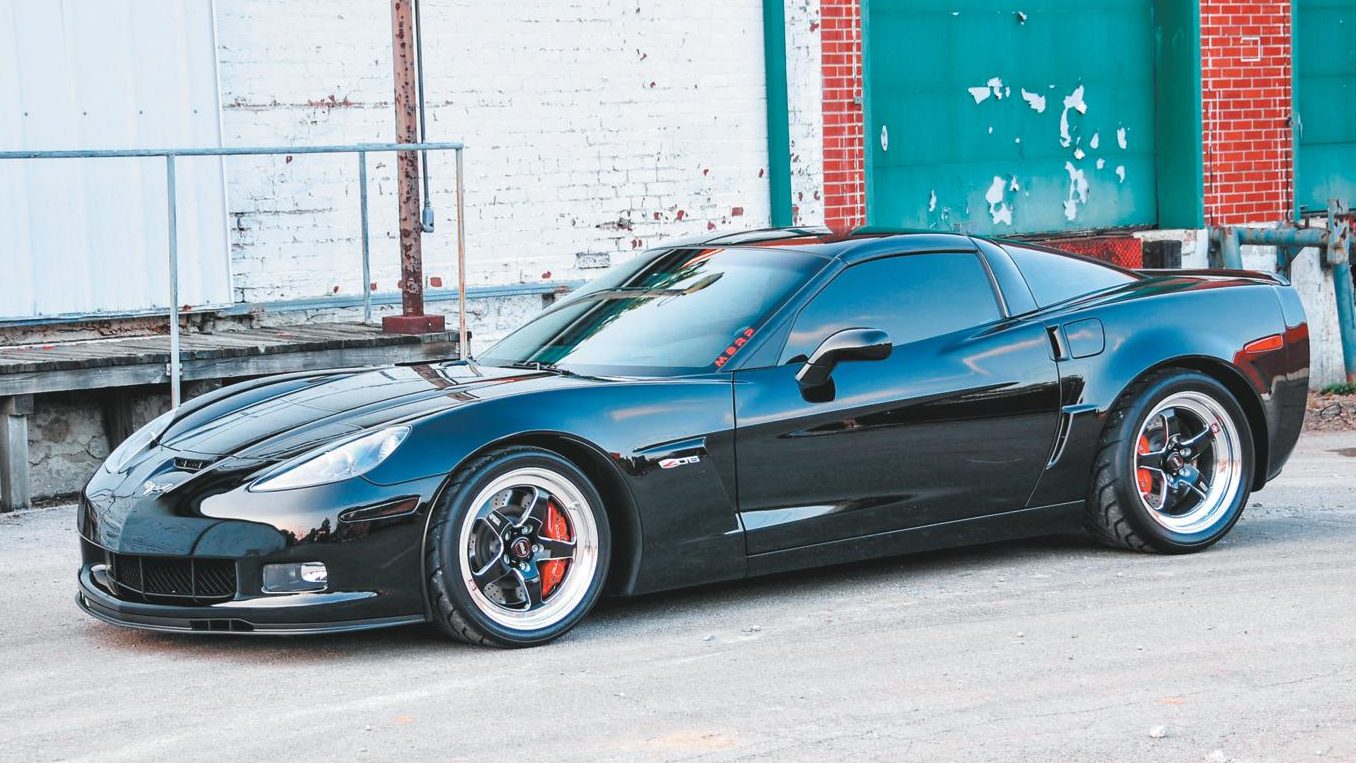
The Z06 was less of a performance package and more of a distinct sub-model—right down to a unique aluminum frame that underpinned the C6 body (a move that shaved over 100 pounds from the car).
Other weight-saving measures include revised fenders made from carbon fiber, along with a magnesium engine cradle. All told, the Z06 tipped the scales at a paltry 3,130 pounds.
But the real magic of the Z06 was under the hood, which sheltered an all new powerplant.
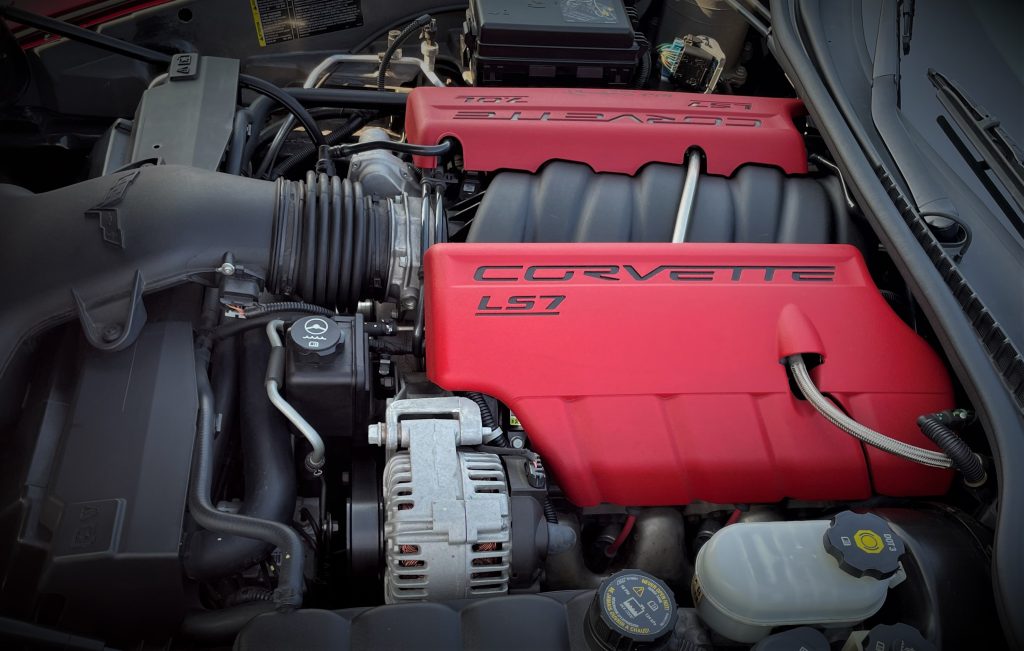
The mighty 7.0L LS7 was derived from the race-bred engine that propelled the C5-R Le Mans cars and boasts the largest displacement of any motor in the LS family tree.
The LS7 cranks out 505 horsepower and, at the time, it was the highest-power naturally aspirated engine GM had ever made. That eye-watering performance was thanks to a robust mix of upgrades like high-flow cylinder heads, titanium intake valves, and a high lift cam. Billet steel main caps, a forged crank, and titanium connecting rods ensure things stay together at WOT.
Suffice it to say, the Z06 stood on the top of the C6 Corvette performance heap. Until…
ZRRRrrrrrr-1111!!one!!one!!!
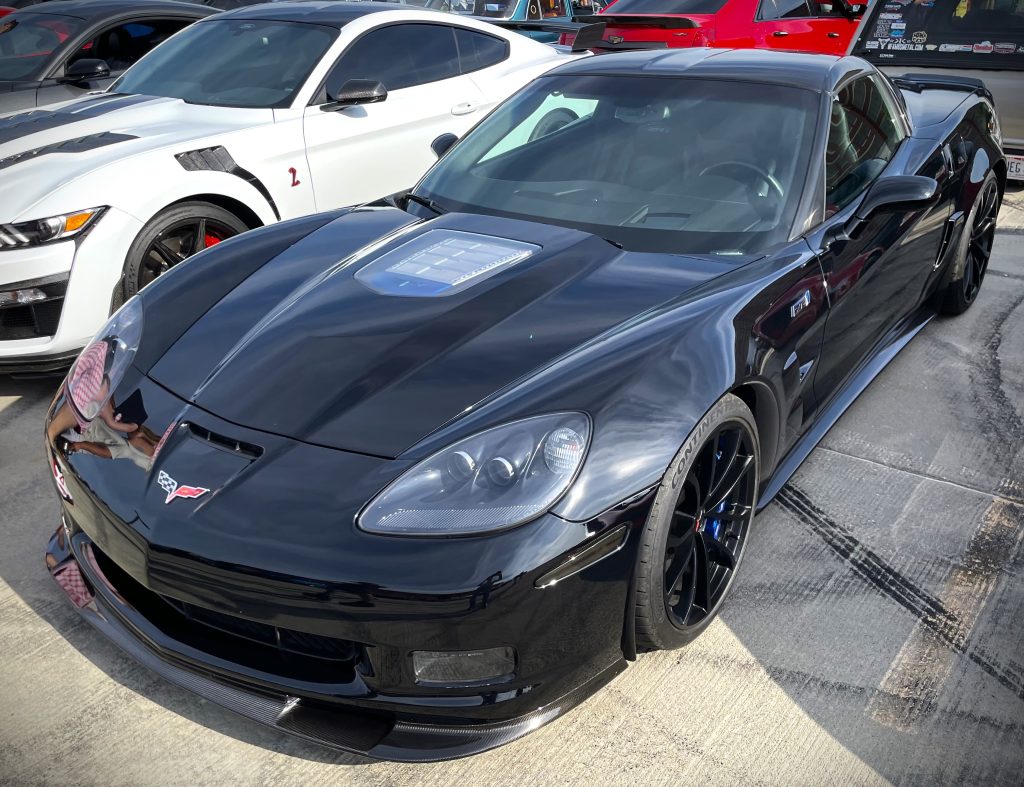
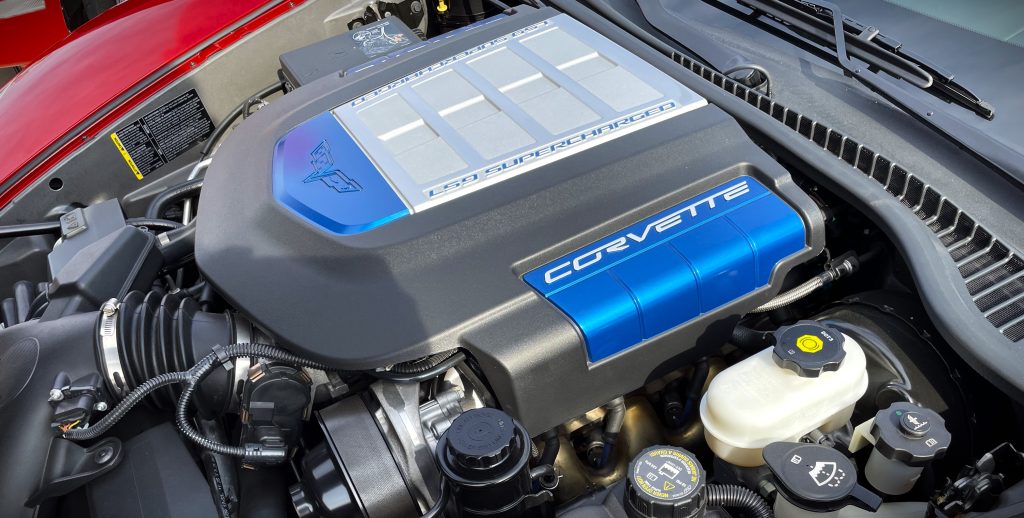
The legendary ZR1 name returned to the Corvette lexicon in 2009. If the Z06 performance package wasn’t enough, the ZR1 upped the ante with forced induction by way of a supercharged LS9 V8.
The boosted LS9 makes a jaw-dropping 638 horsepower.
But raw power output wasn’t the only dose of magic here.
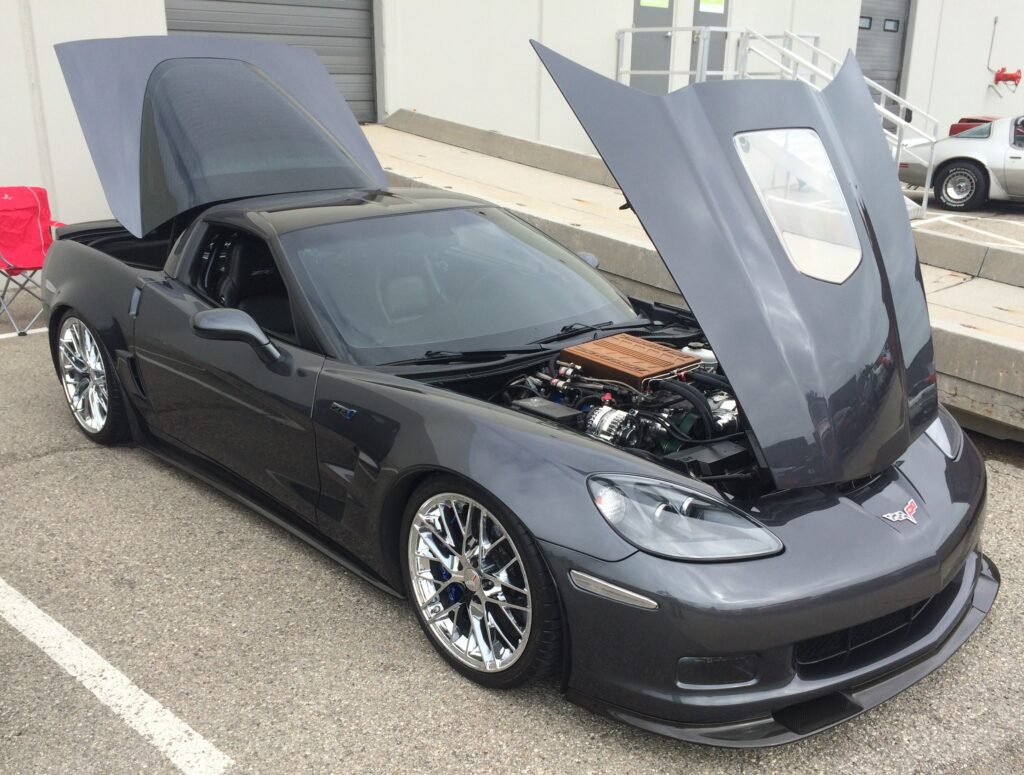
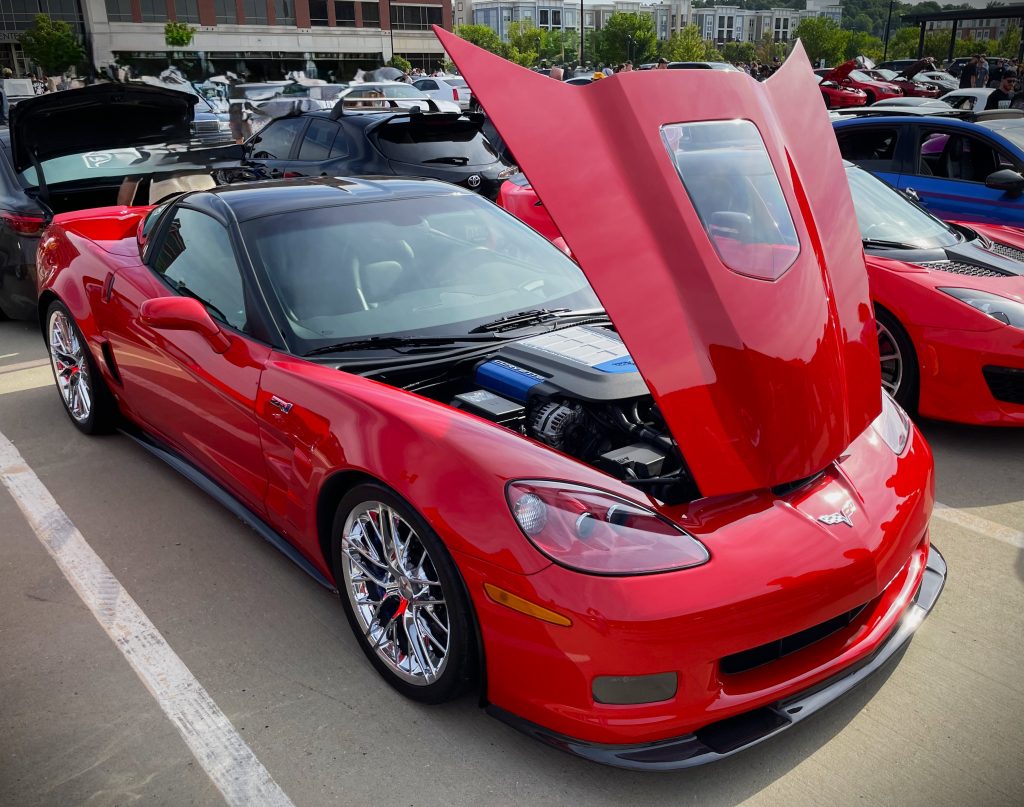
A carbon fiber roof, hood, and other pound-shaving measures were added to compensate for the extra weight of the engine and accessories, which meant that the ZR1 was only slightly heavier than the featherweight Z06.
But enough exposition, let’s get to the goods:
- 0-60 mph in 3.4 seconds
- Low 11s in the quarter mile
- 200+ mph top speed
Suffice it to say—reaching 200 mph in box stock form—the C6 ZR1 was the best-performing Corvette Chevy had ever made.
C6 Corvette Grand Sport
Following on the heels of the ZR1 release in 2009, the 2010 Grand Sport models took the spot of the Z51 performance package and established sort of a middle-ground between the base and Z06 spec Corvettes.
Just like the Z51, the Grand Sport featured a host of suspension and brake upgrades in the form of stiffer springs, bigger sway bars, and six-piston calipers up front. As alluded to above, a lot of the other Grand Sport enhancements were plucked from the Z06 catalog, including the fancy spoiler out back.
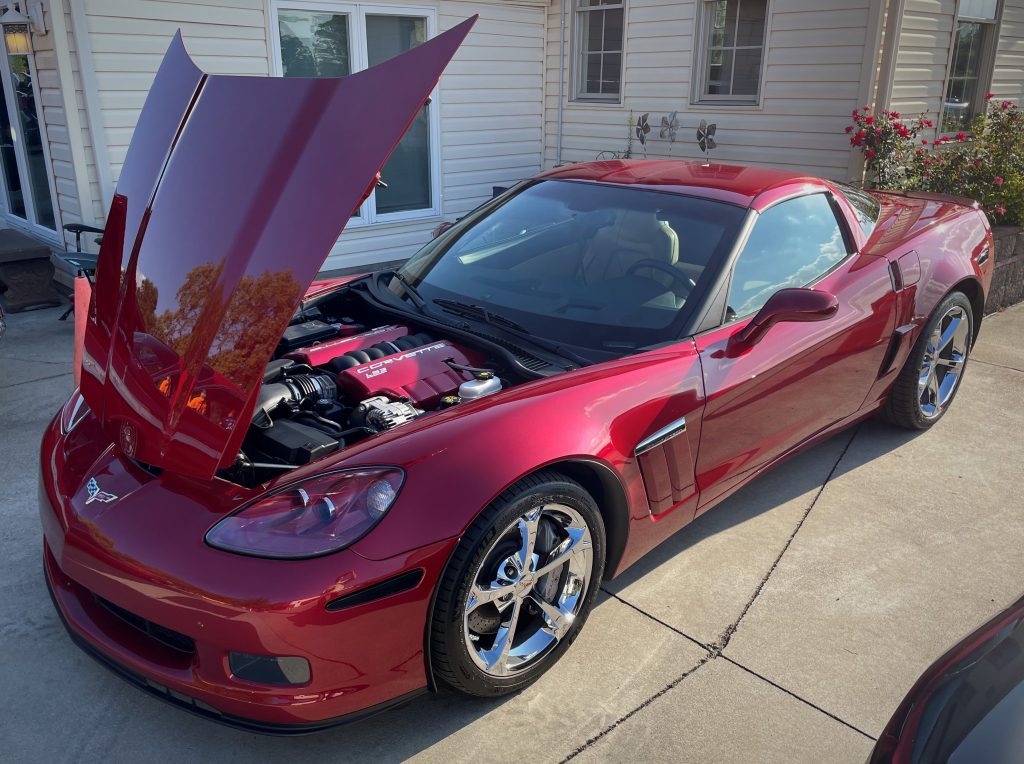
The Grand Sport also boasts wider fenders to cover a bigger tire package, as well as functional Z06-inspired brake cooling ducts front and rear.
Under the hood was the same LS3 found in the base C6 Corvette—except manual-equipped cars got a dry sump oiling system. Manuals also received launch control, while the automatics got revised rear end gearing.
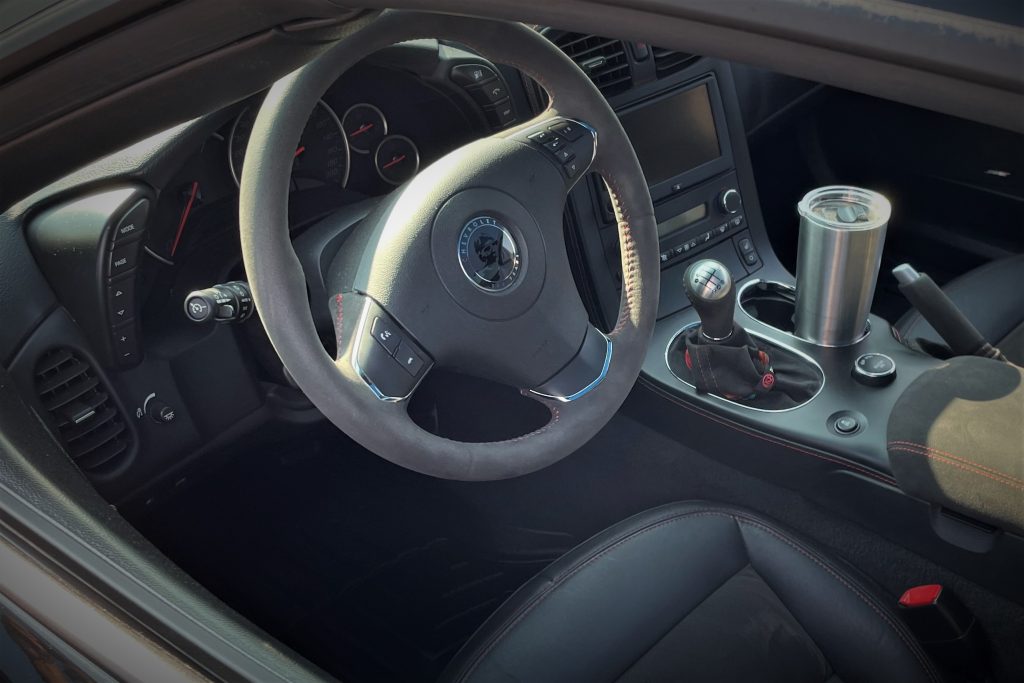
C6 Corvette Grand Sports were offered as both coupes and convertibles.
A Few Other Notable Special Edition C6 Corvettes
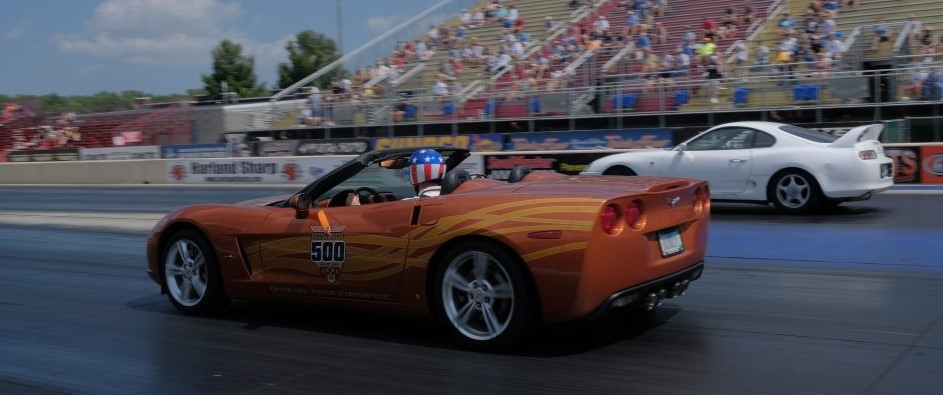
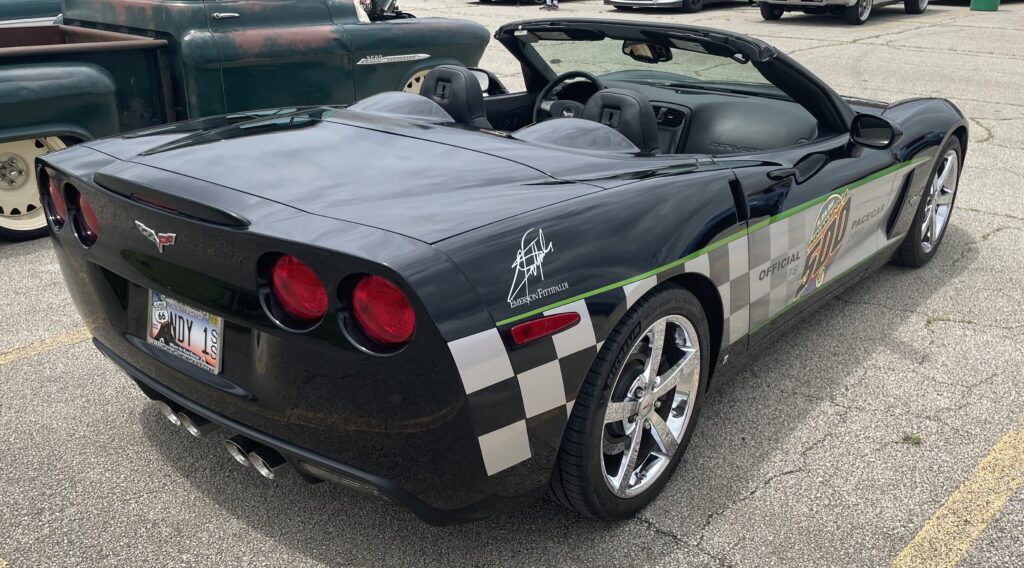
In line with its previous generations, the C6 Corvette features a host of other special editions—including the now obligatory pace car replicas.
The first pace car replica broke cover in 2007, and then another one arrived a year later in 2008. (That year, it also served to commemorate the 30th anniversary of the first pace car Corvette in 1978.)
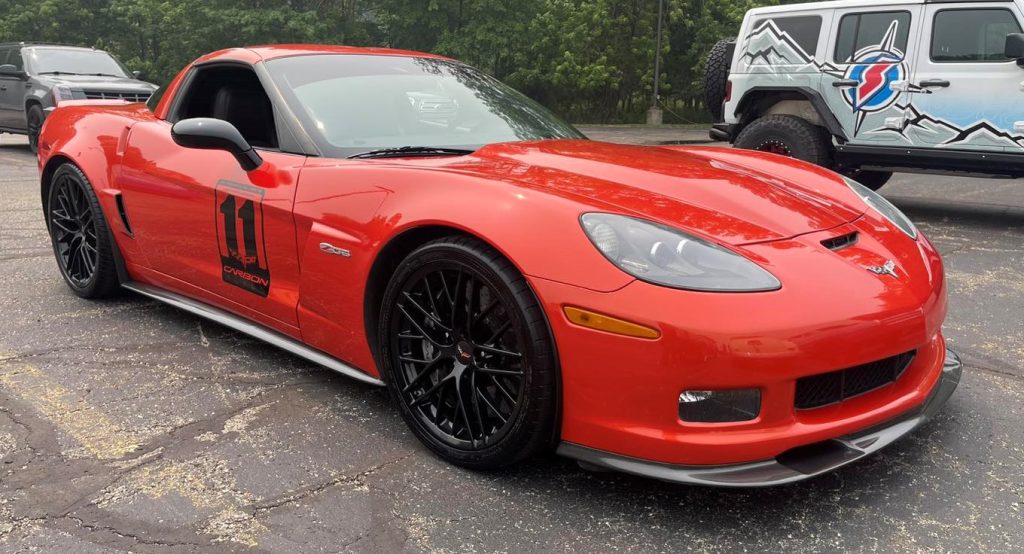
One of the more interesting C6 variants is the Z06 Carbon, released only for the 2011 model year. It was essentially a Z06 with some cosmetic enhancements, namely blacked-out mirrors, wheels, and headlights.
On the performance side, these Z06 Carbon models all got magnetic ride control suspensions.
The C6 also celebrated another milestone: the Corvette’s 60th birthday.
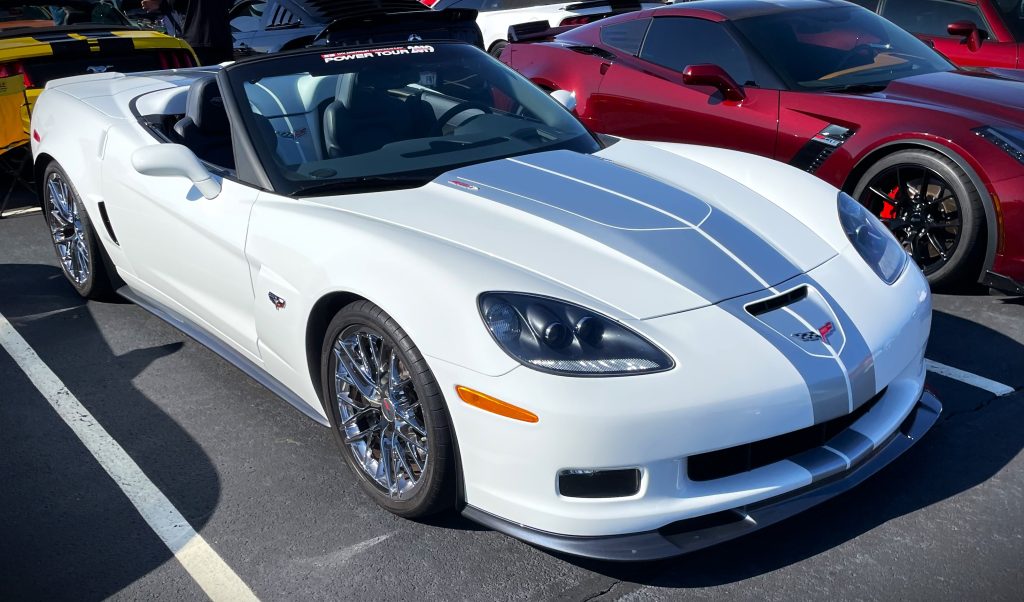
As expected, Chevy released a special model to commemorate the event in 2013. These 60th anniversary Corvettes featured a unique “Arctic White” paint job set off by a pair of “Pearl Silver Blue” stripes, while complementing blue suede graces the interior.
60th Anniversary cars were replete with special 60th badging inside and out.
The XLR: A Caddy That (Really) Zigs
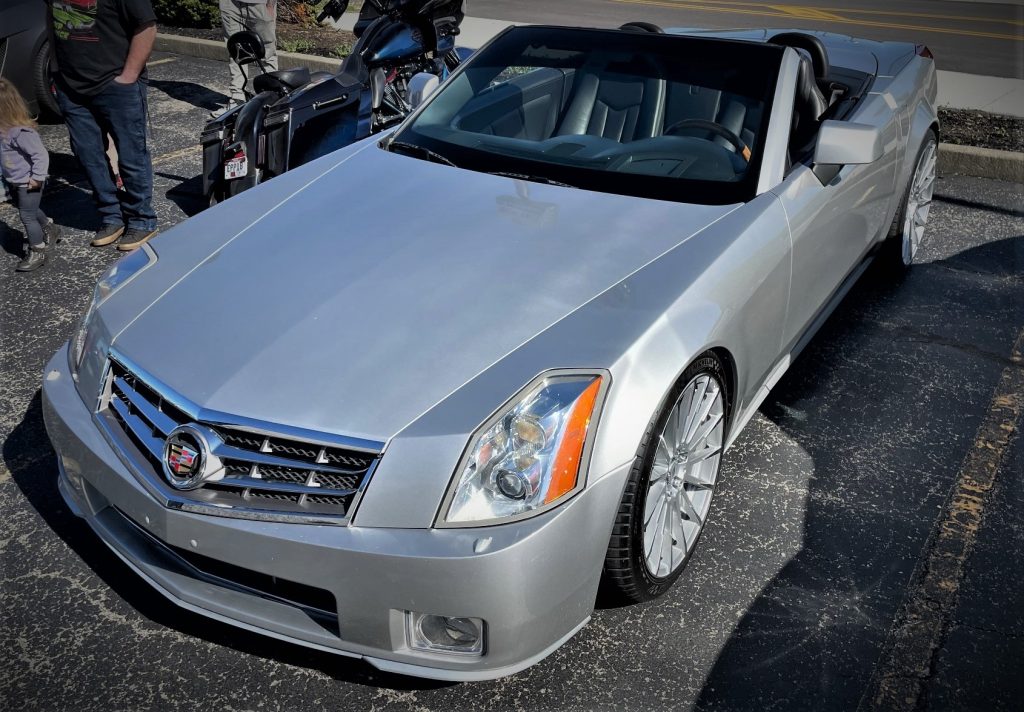
No talk about the C6 would be complete with a small mention of the Cadillac XLR. Seeking a flagship performance model for its lineup, Caddy phoned up its GM neighbor division, Chevrolet.
Yup, for the first time in its history, the Corvette was going to share platforms with another production GM vehicle.
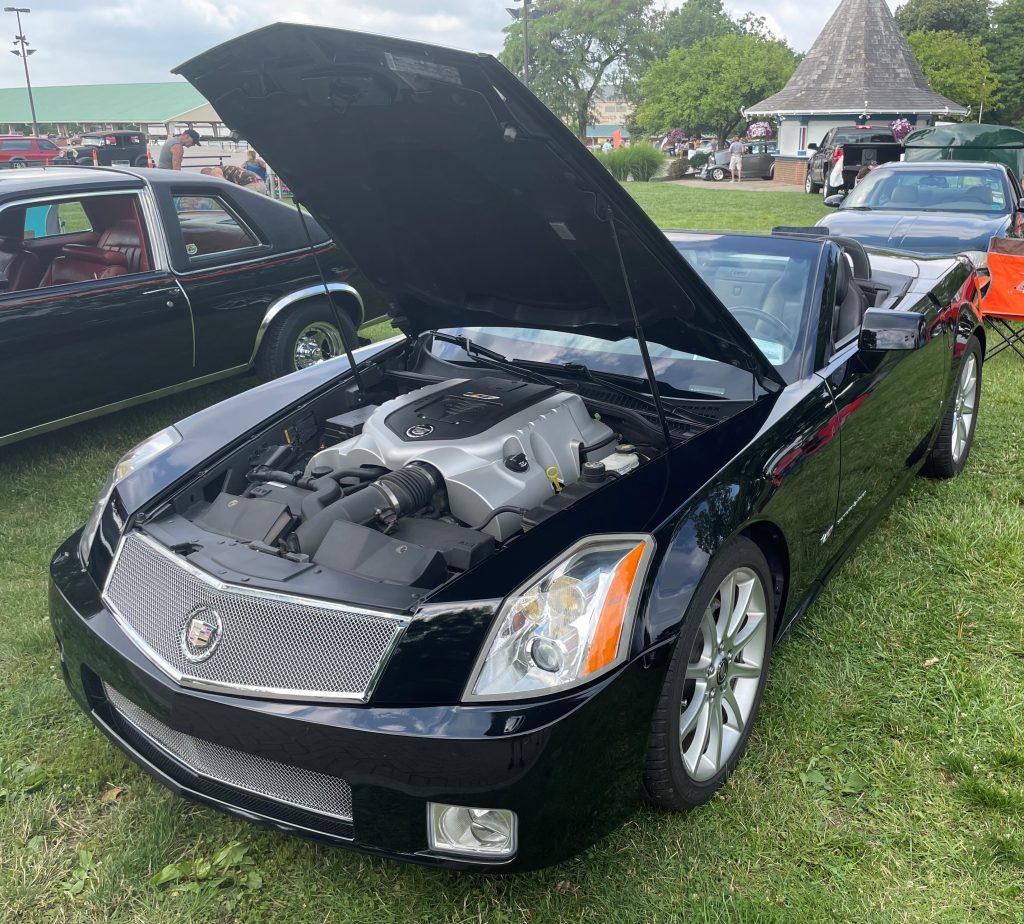
But the XLR was way more than a simple badge-engineered panel swap, and that’s evident when you look under the hood. Instead of a venerable member of the LS family, you’ll find a Cadillac-sourced Northstar V8.
The Northstar came in two flavors over the XLR’s production run, either a naturally aspirated 4.6L LH2 V8 good for 320 horsepower or a supercharged 4.4L LC3 that was available exclusively in the XLR-V and made a healthy 443 horsepower.
Never the strong seller Cadillac hoped for, the XLR was only offered from 2004-09.
The C6 Corvette Legacy
Chevy took its C6 Corvette to the track, were it continued to build on the Corvette Racing Program’s success on endurance circuits. The C6.R grabbed podium finishes in various classes (GT1, GT2, GTE-Pro, GTE-Am) at famous races like Le Mans and Sebring, and is a common sight at local autocross and road course events still today.
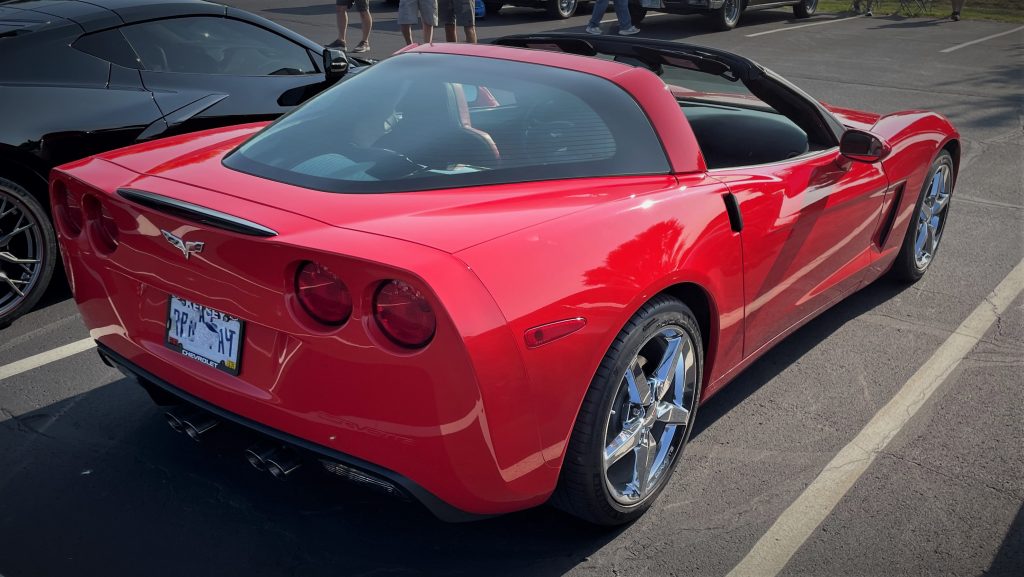
More importantly, thanks to its reliability and practicality, the C6 Corvette evolved into a sports car that’s easy to live with on a commute grind or grocery trip.
Looking at the sales figures, you could see the appeal of the C6 as well.
In fact, it it hadn’t been for the economic downturn of 2008, the C6 was on track to hit the lofty sales numbers that the C3 Corvette enjoyed in the mid-to-late 1970s—once again proving to the GM bean counters that there was a business case to be made for America’s Sports Car.
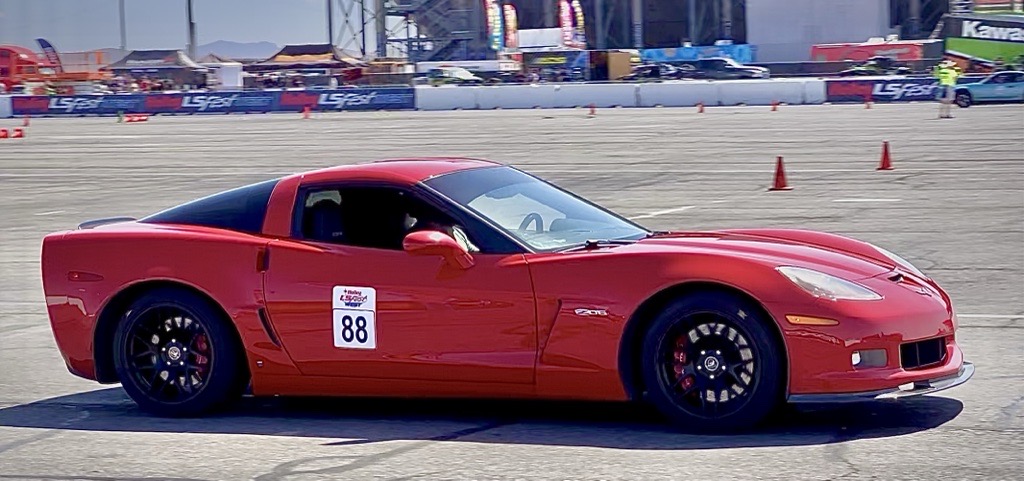
The end result is that there are plenty of C6 Corvettes floating around in the used market, making them excellent performance bargains for drivers on a budget.
Better still, there’s a massive assortment of aftermarket performance parts for C6 Corvettes and, given the flexibility of the LS platform, it means these cars are both relatively easy to work on and reliable.
Want to start upgrading yours? We recommend you read this:
C5 & C6 Corvettes: The Standard for Budget Performance