Electronic Fuel Injection (EFI) has been with us since the late 1970s. The 1976-79 Cadillac Seville was the first domestic US automobile to be fitted with EFI as standard equipment, making it way ahead of its time. The Seville’s 350ci engine (actually an Olds) used a Bendix/Bosch multiport system to deliver 180 horsepower and improved fuel economy (17 MPG city/23 MPG highway) compared to most 350ci V8s with a carburetor.
EFI appeared on Ford vehicles in the early 1980s. In this article, we’ll go over the EFI systems Ford installed on Mustangs from the mid-1980s through the present (2026). We’ll also talk about the types of fuel injectors used and provide some sources for choosing the right-size injectors for a modified build.
EFI System Types
There are three basic types of electronic fuel injection Ford used on Mustangs:
Central Fuel Injection(CFI) was what Ford called its throttle body injection system in the 1980s. CFI featured a two-barrel throttle body with an electronically-controlled fuel injector for each throttle bore. Since it resembled a carburetor, it was easy to retrofit to carbureted engines.
CFI was available on 1984 and 1985 Mustangs with the flat-tappet-cammed 5.0L V8 and an AOD automatic. It was not used on the 1985 roller-cammed 5.0L engines. CFI was also used Mustangs with 3.8L V6 engines from 1984 until 1986 when the engine was dropped
Unlike modern throttle body-style aftermarket EFI systems, CFI wasn’t a high-performance fuel injection system. In fact, enthusiasts often swapped it for a four-barrel carburetor.
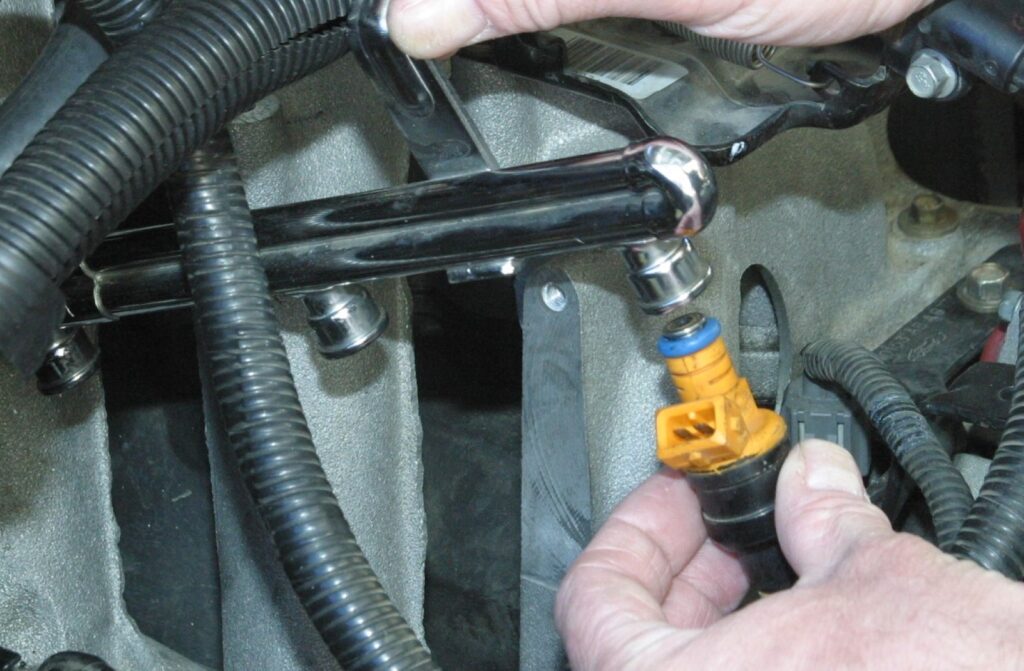
Sequential Electronic Fuel Injection (SEFI) was Ford’s name for port fuel injection. Introduced on the 1986 5.0L Mustang, the system featured an upper plenum that collected air and a lower manifold with eight fuel injectors, one for each intake port. The air and fuel were mixed before entering the cylinder heads. The electronic control module (EEC-IV in Ford-ese) fired the injectors when the intake valves opened based on the engine’s firing order sequence. As the throttle is opened and more fuel is required, the injectors fired for longer intervals (pulse widths) to deliver additional atomized fuel to the intake ports.
Beginning in 1986, The 5.0L Mustang GT had 19 lb.-hr. injectors and a return-style fuel system where unused fuel was cycled back to the tank. In 1999, Ford went to a non-return fuel system with less complexity.
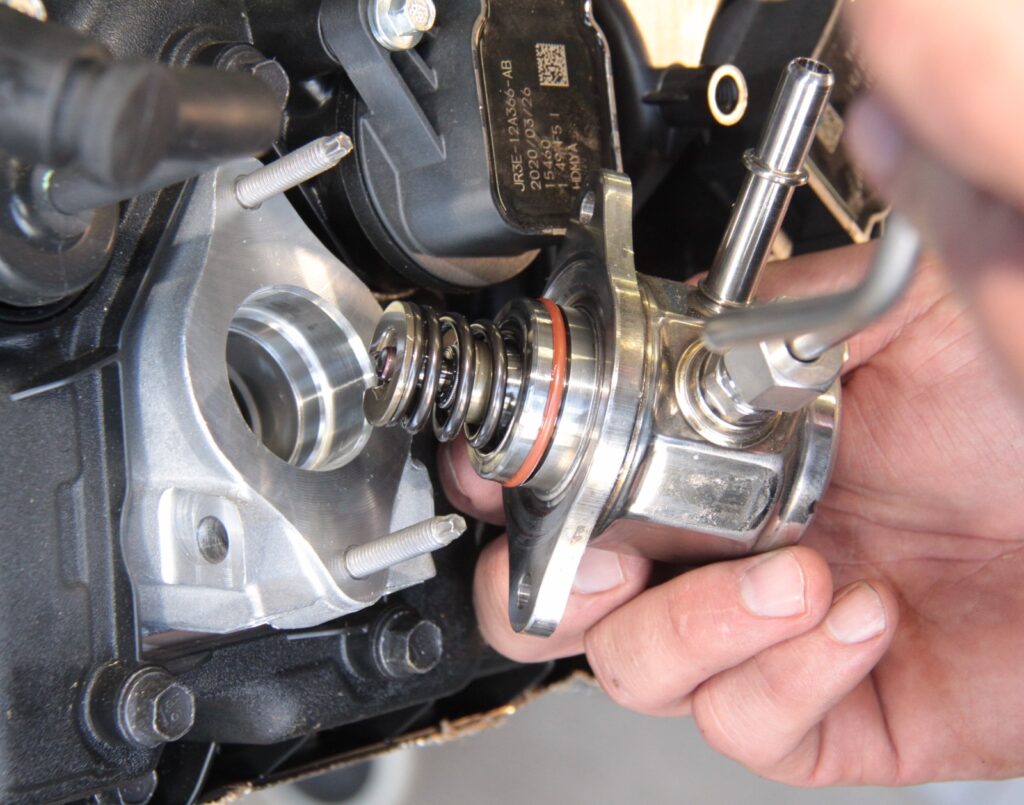
Direct Injection injects fuel under very high pressure, much like diesel engines do. In theory, direct injection is a simple process. An electric fuel pump sends fuel to the mechanical direct injection piston pump that is actuated by a camshaft—on the Gen 3 Coyote 5.0L, it is the passenger side exhaust cam. The DI pump raises fuel pressure to around 2,000 to 3,000 PSI. The fuel is then injected directly into the cylinder head combustion chambers, timed with piston travel during the compression stroke.
Direct injection allows more precise control over the air/fuel ratio for better emissions and fuel economy. Spraying fuel directly into the combustion chamber also reduces cylinder temperatures, allowing for higher compression ratios and more aggressive ignition timing. That means more horsepower.
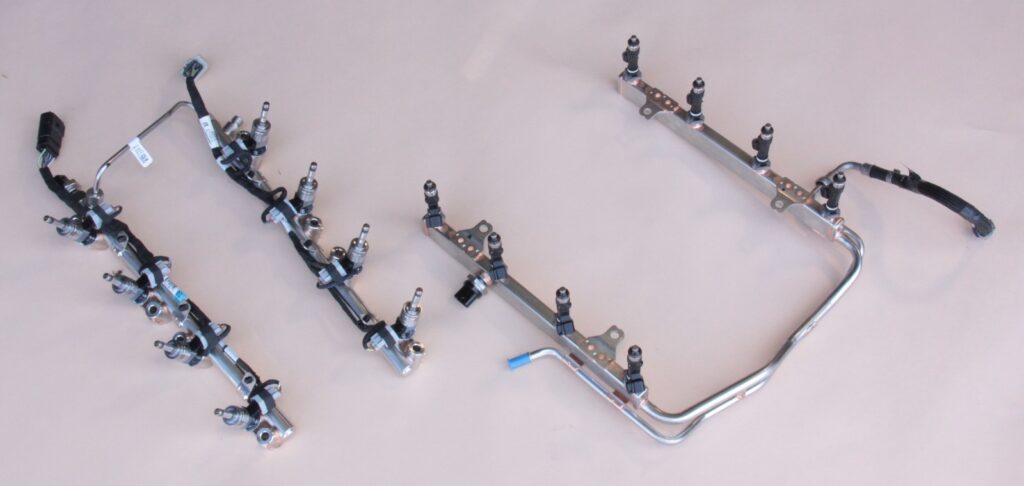
Direct injection’s main drawback is carbon buildup on the intake valves and injector nozzles. Ford went with a ‘dual injection’ system for the Gen 3 5.0L Coyote beginning in 2018 to mitigate the issue. In simple terms, the system uses both direct and port fuel injection. Port injection is used to help reduce the carbon buildup that happens at idle and part-throttle operation. The ECU switches to direct injection at higher engine speeds to boost power and fuel economy. This Ford Muscle article gets into more detail on the dual injection system.
Ford Fuel Injector Types
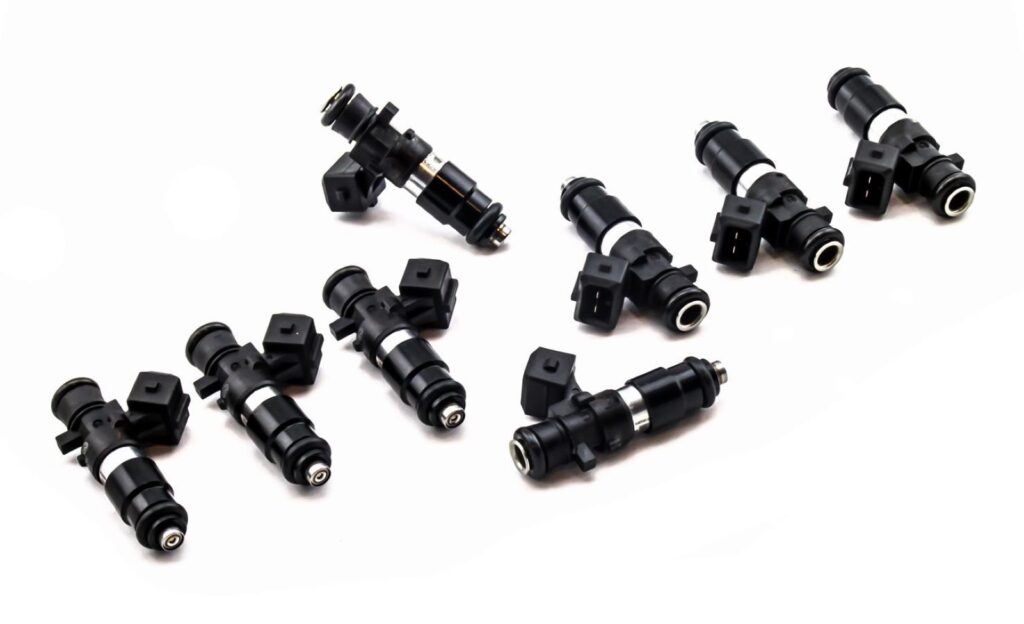
There are three basic types of fuel injectors used on Mustangs, all made by Bosch:
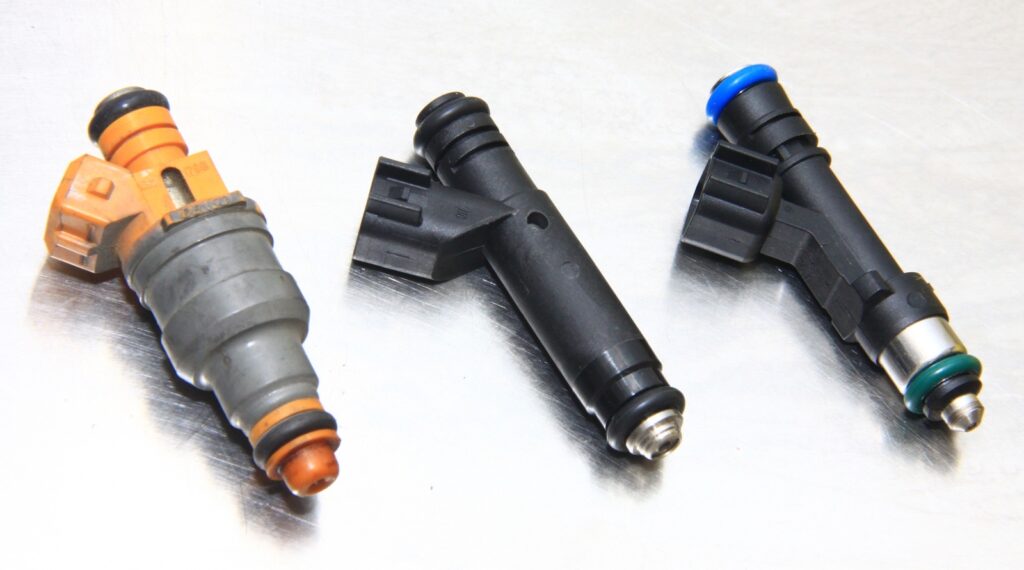
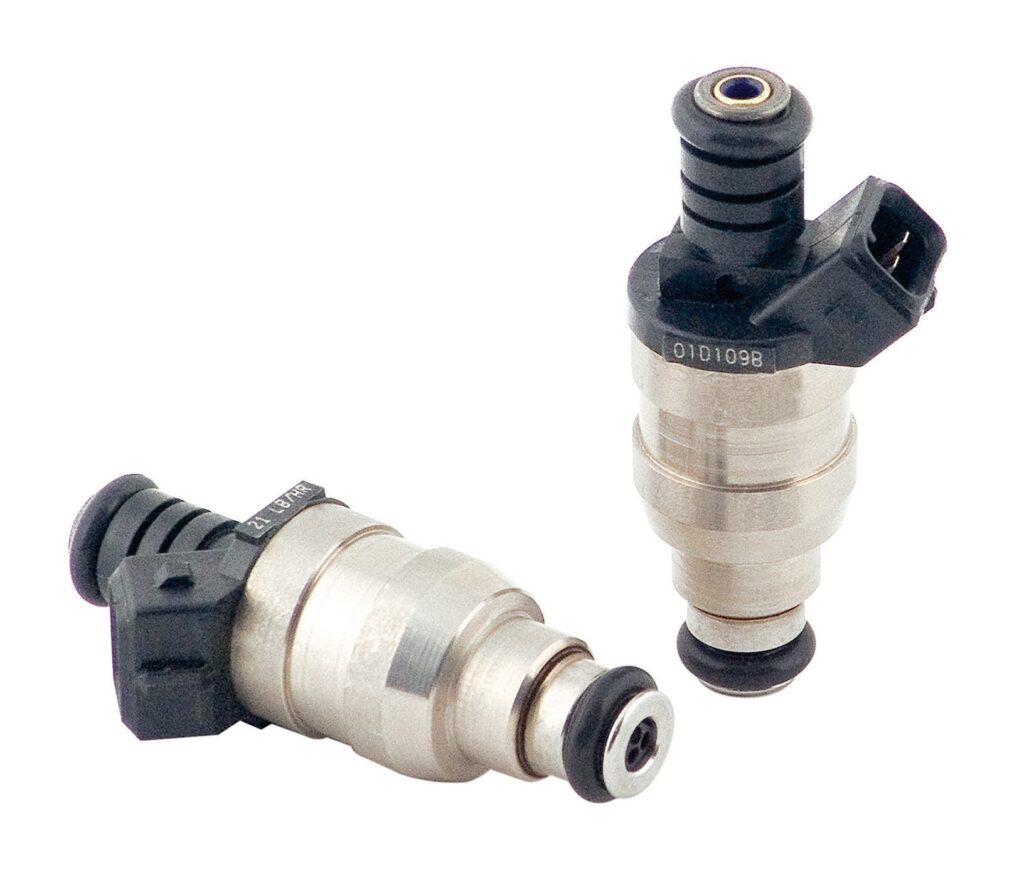
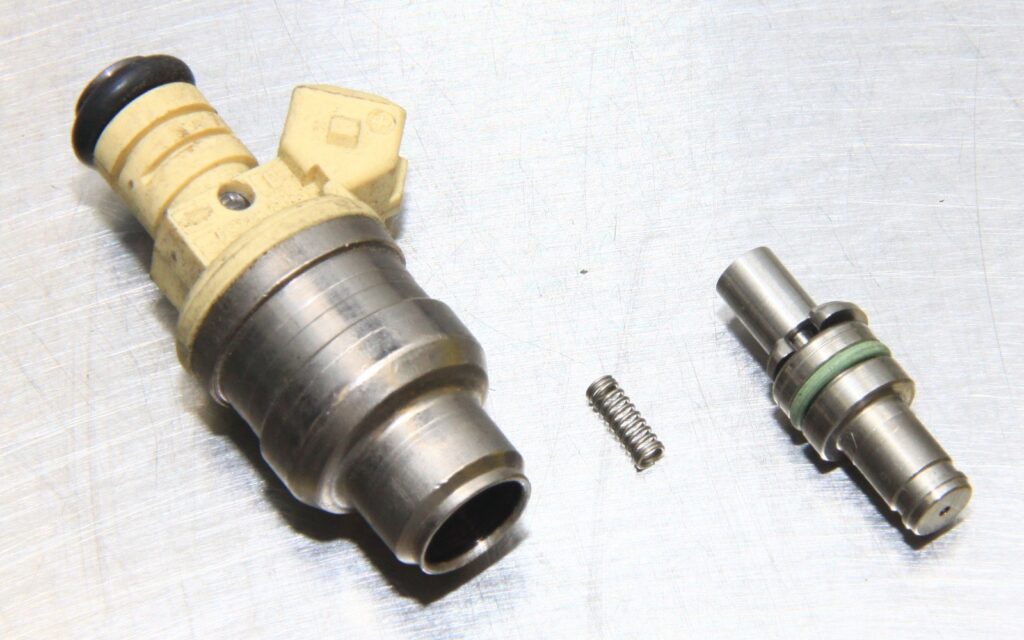
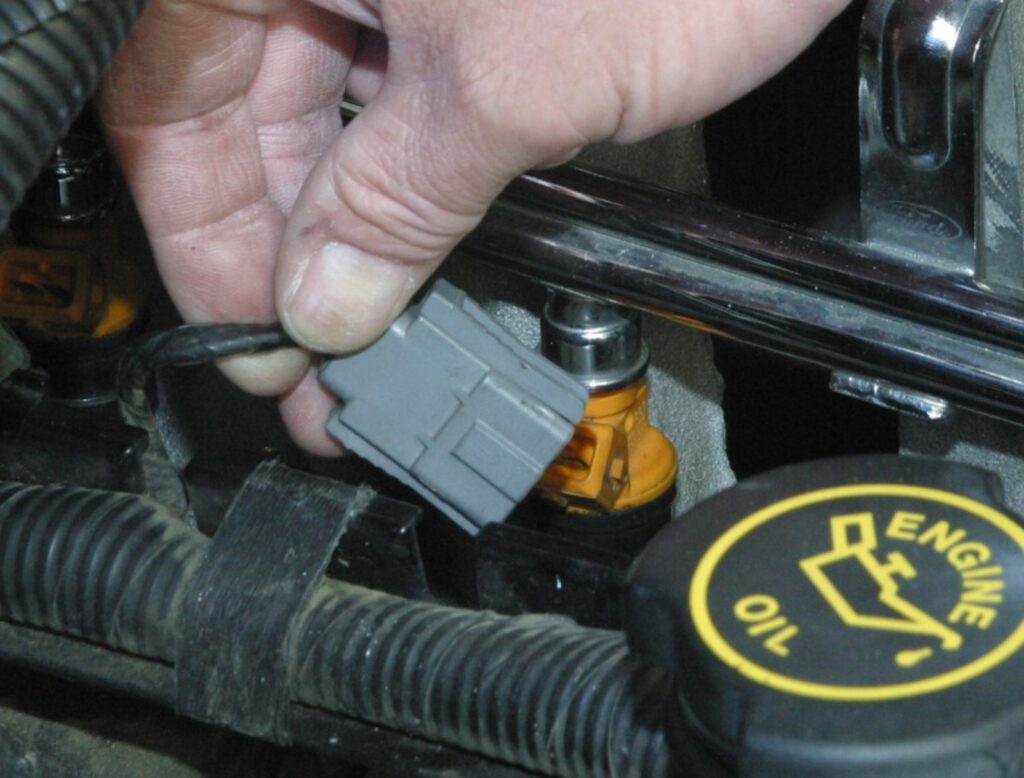
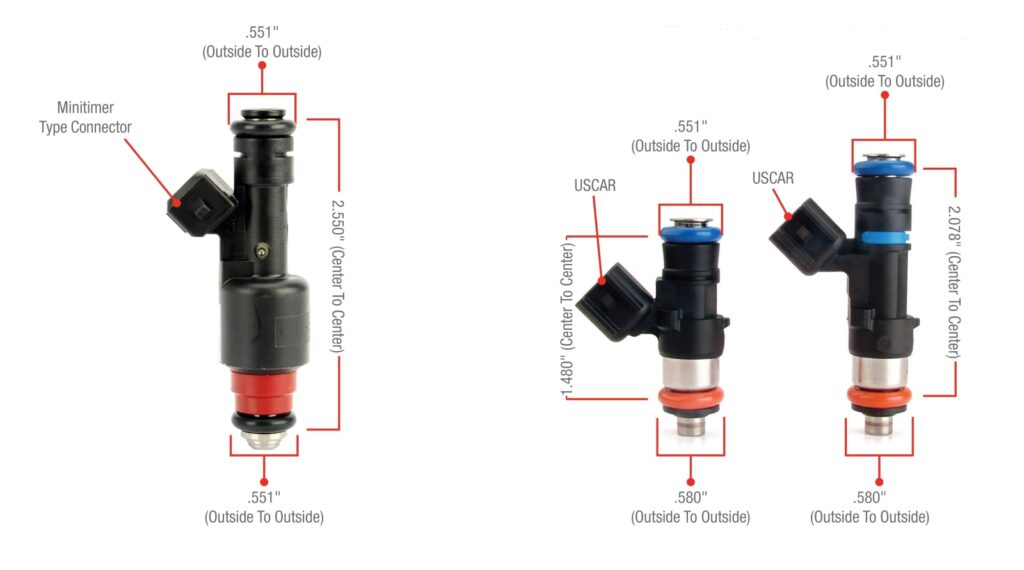
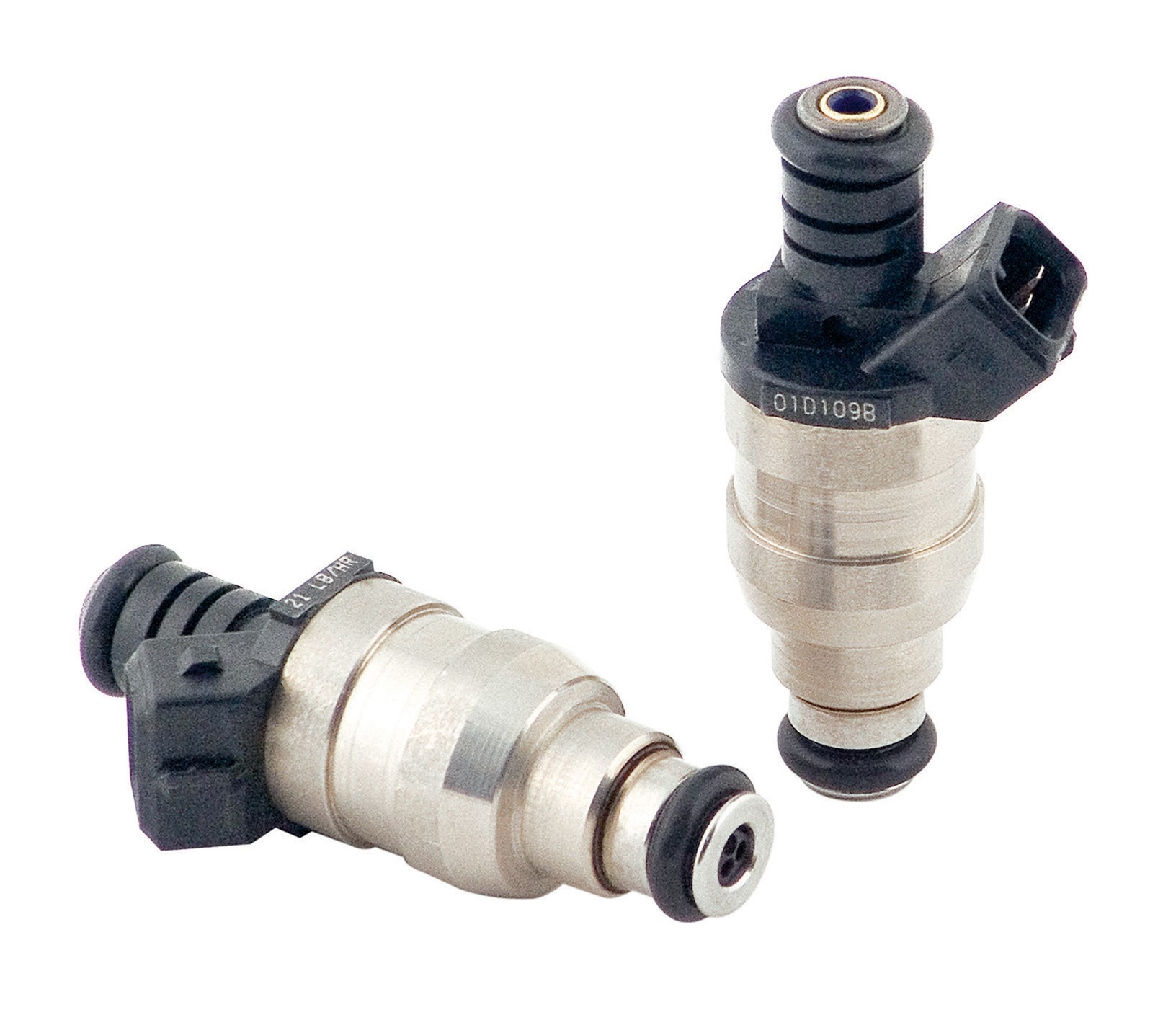
The EV1 injector was used on engines ranging from the 3.8L V6 to 2.3L Turbo, 5.0L, and 4.6L 2-Valve (SOHC). It has a large metal body (earning the nickname “fat” injector) and a two-pin Jetronic/Minitimer connector with flat pins.
Here are the Mustangs that used EV1 injectors from the factory:
- 1994-98 3.8L V6: 14 lbs.-hr.
- 1986-95.0L, 1996-2003 4.6L 2V: 19 lbs.-hr.
- 2003-04 4.6L 2V: 21 lbs.-hr.
- 1993 Cobra, 1996-98 Cobra: 24 lbs.-hr.
- 1984-85 Mustang SVO: 30 lbs.-hr.
- 1985.5-86 Mustang SVO: 35 lbs.-hr.
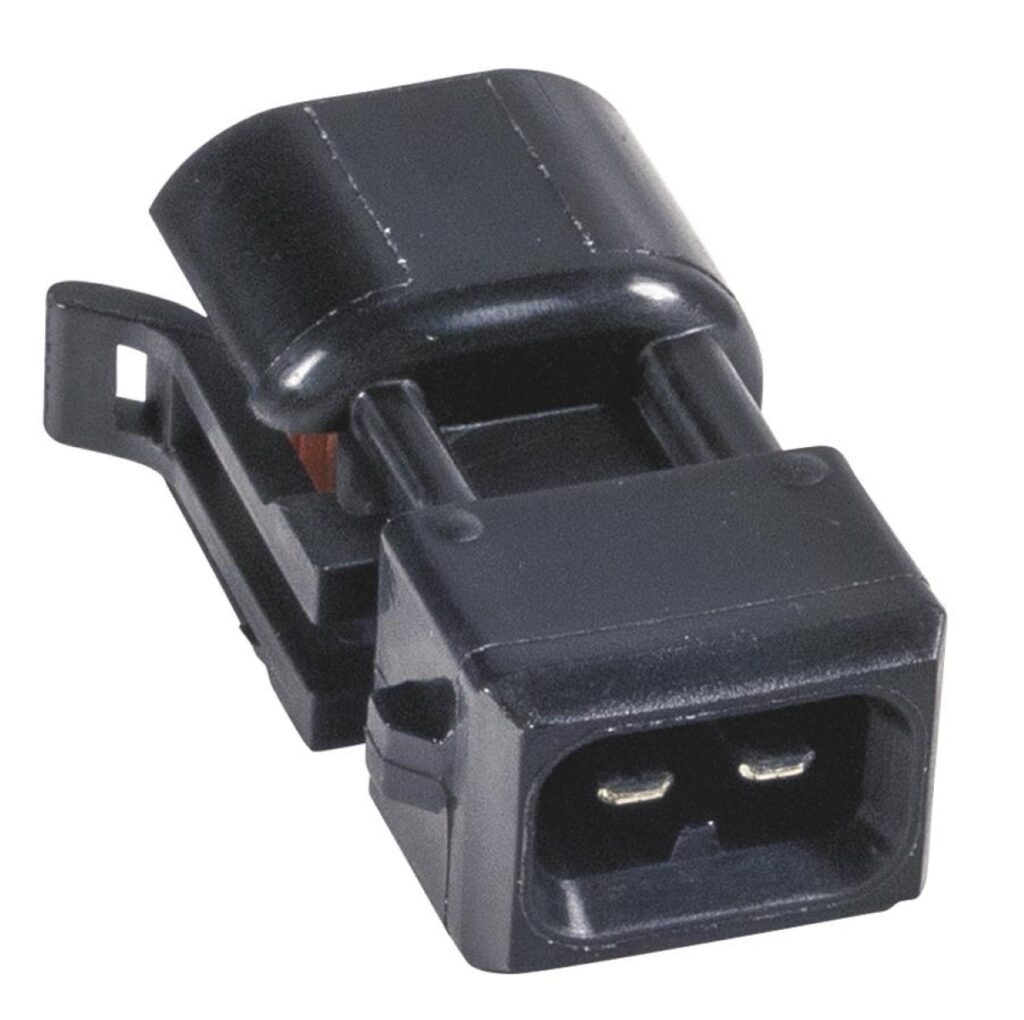
The EV6 injector is a narrow-body design used on later model 3.8L V6s as well as 4.6L 4-Valve (DOHC) and 4.6L 3-Valve engines. They have a USCAR two-pin connector with round pins. Ford used them on these Mustangs:
- 1999-04 3.8L V6: 22 lbs.-hr.
- 1990-01 Cobra 4.6L 4V: 24 lbs.-hr.
- 2003-04 Mach 1 4.6L 4V: 24 lbs.-hr.
- 2005-10 4.6L 3V: 24 lbs.-hr.
- 2003-04 Cobra Terminator: 38 lbs.-hr.
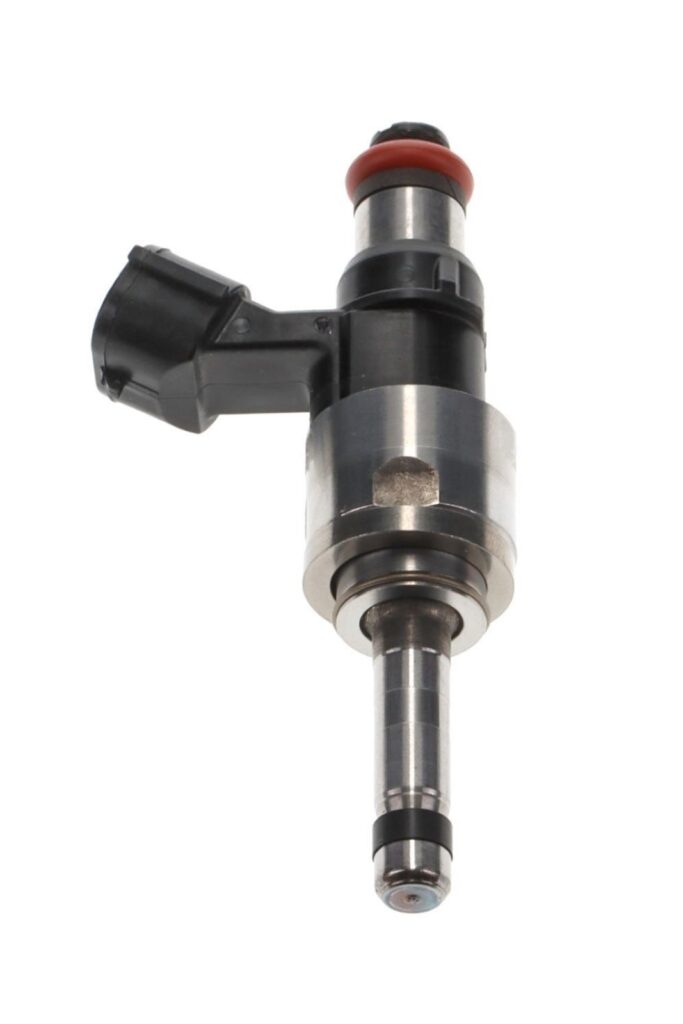
The EV14 injector looks similar to the EV6 injector and uses the same USCAR two-pin connectior. Refinements include an improved spray pattern, a single-piece molded body to reduce leaks, and fewer parts. The EV14 is interchangeable with the EV6 and also EV1 injectors if you use a connector adapter kit.
You’ll find EV14 injectors on these Mustangs:
- 2005-10 4.0L V6: 19 lbs.-hr.
- 2011-17 3.7L V6: 29 lbs.-hr.
- 2015-26 2.3L Ecoboost: 24 lbs.-hr.
- 2011-17 5.0L Coyote: 34 lbs.-hr.
- 2018-26 5.0 Coyote: 28 lbs.-hr. (port injection system)*
- 2016-20 5.2L Shelby GT350: 34 lbs.-hr.
- 2007-12 Shelby GT500: 47 lbs.-hr.
- 2013-14 Shelby GT500: 52 lbs.-hr.
- 2022-22 Shelby GT500: 55 lbs.-hr.
*Direct injection injector flow rate is determined by DI fuel pump
Fuel Injector Sizing
Fuel injectors are rated by the number of pounds of fuel injected per hour (lbs.-hr.) at wide-open throttle. When demand increases, fuel delivery (pulse width) increases. Pulse width is how long the injector is open and delivering fuel. The electronic “pulse” lasts longer at wide-open throttle, delivering greater amounts of fuel.
When sizing fuel injectors, it is always better to go richer than leaner. An air/fuel mixture that’s too lean can do serious engine damage.
There’s a science to choosing the proper size injectors for modified engines that we won’t get into here. You can learn more about fuel injector sizing and get formulas for calculating it in these articles:
How to Calculate Optimum Fuel Injector Size
What Size Injectors Do I Need?